
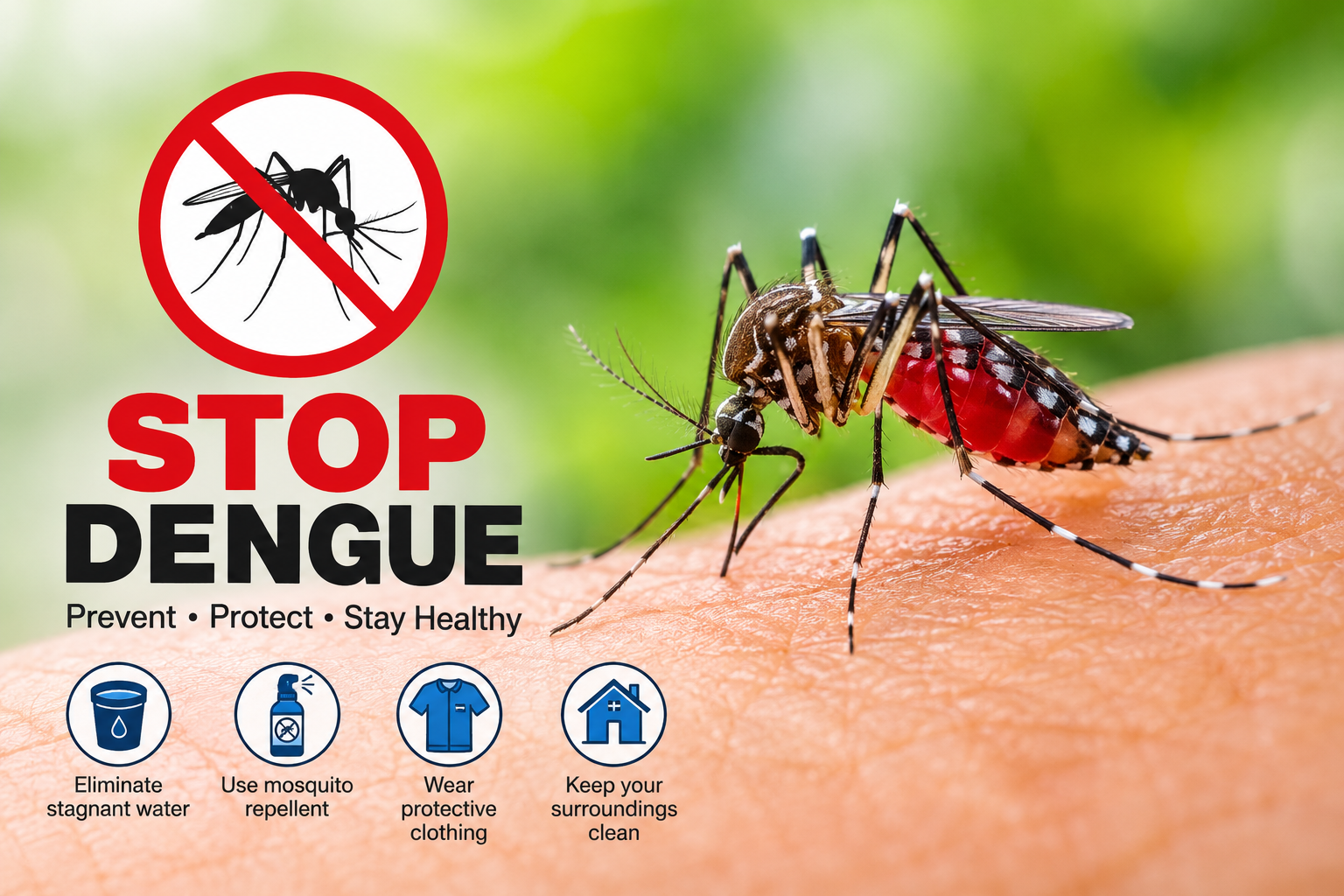
Dengue fever remains an important public health concern in the Maldives. With its tropical climate, regular rainfall and environmental conditions that support mosquito breeding, the country remains vulnerable to dengue transmission throughout the year, with increased risks during periods of heavy rainfall.
Dengue is a mosquito-borne viral infection transmitted primarily through the bite of infected female Aedes aegypti and Aedes albopictus mosquitoes. Although many people recover with appropriate supportive care, dengue can sometimes develop into a serious and potentially life-threatening illness.
One of the biggest challenges with dengue is that its early symptoms can resemble those of other common viral infections. Recognising the symptoms, understanding the warning signs and seeking medical attention at the right time are essential to preventing complications.
1. How Does Dengue Spread?
Dengue is caused by the dengue virus, which has four distinct serotypes: DENV-1, DENV-2, DENV-3 and DENV-4.
The infection spreads when an infected mosquito bites a person. The virus can then circulate in the person's bloodstream, allowing another mosquito to acquire the infection when it feeds on that individual.
In the Maldives, the Aedes mosquito is particularly important because it commonly breeds in and around residential areas. Unlike some other mosquito species, Aedes mosquitoes can breed in relatively small amounts of stagnant water found in everyday household objects.
Common mosquito breeding locations include:
- Uncovered water storage containers and tanks.
- Flowerpots, plant trays and discarded coconut shells.
- Empty bottles, cans and plastic containers.
- Old tyres and construction materials.
- Blocked drains and areas where rainwater accumulates.
- Unused buckets and other water-holding equipment.
It is important to understand that dengue is not usually transmitted directly from one person to another through ordinary physical contact.
2. Recognising the Symptoms of Dengue
Symptoms generally develop within 4–10 days after an infected mosquito bite, although the timing can vary.
The most common symptoms include:
- Sudden onset of high fever.
- Severe headache.
- Pain behind the eyes.
- Muscle and joint pain.
- Nausea and vomiting.
- Skin rashes.
- General weakness and fatigue.
- Loss of appetite.
Some individuals may experience only mild symptoms, while others can develop more serious complications.
Dengue symptoms can initially resemble influenza and other viral infections. Therefore, individuals experiencing a sudden fever accompanied by body aches or other symptoms should seek medical assessment, particularly during periods of increased dengue transmission.
3. Understanding the Warning Signs of Severe Dengue
One of the most important things the public should understand is that a reduction in fever does not necessarily mean that the patient is recovering.
In some cases, the critical phase of dengue begins around the time the fever subsides. This period generally occurs approximately 3–8 days after the onset of fever.
During this phase, certain patients may develop complications involving fluid leakage, bleeding and circulatory problems.
Seek immediate medical attention if any of the following warning signs occur:
- Severe or persistent abdominal pain.
- Persistent vomiting.
- Bleeding from the nose or gums.
- Blood in vomit or stools.
- Extreme tiredness, weakness or restlessness.
- Difficulty breathing.
- Reduced urine output.
- Pale, cold or clammy skin.
Severe dengue is a medical emergency. Patients experiencing these symptoms should not wait for their condition to improve at home.
Early medical assessment and appropriate supportive treatment significantly improve the chances of recovery.
4. What Should You Do If You Suspect Dengue?
If you or a family member develops symptoms suggestive of dengue, it is important to seek medical advice.
For individuals with mild dengue who have been assessed as suitable for home care, the following measures are generally recommended:
Maintain adequate hydration
Drink sufficient fluids throughout the day. Water, oral rehydration solutions (ORS), soups and other appropriate fluids can help maintain hydration.
Get sufficient rest
Avoid strenuous activities and allow the body sufficient time to recover.
Use appropriate medication
Paracetamol may be used to manage fever and body pain, following the recommended dosage and medical advice.
Avoid aspirin, ibuprofen and other non-steroidal anti-inflammatory drugs (NSAIDs), as these medications can increase the risk of bleeding.
Monitor your symptoms
Pay particular attention to abdominal pain, persistent vomiting, bleeding, reduced urine output and unusual weakness. These symptoms require urgent medical assessment.
Attend medical follow-ups
Your healthcare provider may recommend blood investigations, including a complete blood count (CBC), depending on your symptoms and clinical condition. Medical follow-up is particularly important as the fever begins to subside.
There is currently no specific antiviral medication that cures dengue. Treatment focuses on supportive care, maintaining hydration and identifying complications early.
5. How Can You Prevent Dengue?
Preventing dengue requires collective responsibility. Eliminating mosquito breeding sites is one of the most effective ways to reduce transmission.
The following preventive measures are recommended:
Eliminate stagnant water
Inspect your home, workplace and surrounding areas at least once a week. Empty, clean or dispose of containers that can collect rainwater.
Cover water storage containers
Ensure that water tanks, barrels and other storage containers are properly covered to prevent mosquitoes from accessing them.
Use mosquito repellents
Apply suitable mosquito repellents according to the manufacturer's instructions. Products containing DEET, picaridin or IR3535 are recognised options.
Wear protective clothing
Wear long-sleeved shirts, long trousers and other clothing that reduces exposed skin, particularly when outdoors.
Maintain a clean environment
Dispose of empty bottles, cans, tyres and other discarded items responsibly. Ensure that drains and outdoor areas are free from accumulated water.
Protect your home
Use window screens where possible and mosquito nets when appropriate. Remember that Aedes mosquitoes can bite during daylight hours, so protection should not be limited to nighttime.